As ECG technology becomes more advanced, ensuring that clinical staff are proficient in device operation is critical. For resting ECG workflows, user competency directly affects signal quality, diagnostic accuracy, and patient safety. Certification programs tailored to an EDAN ECG machine can standardize training, enhance clinician confidence, and reduce errors in both routine and complex cardiac assessments.
Why Certification Matters in ECG Practice
Certification provides formal recognition that a clinician has mastered the operation of ECG systems and understands relevant protocols. This is particularly important in multi-user environments, where consistency in resting ECG acquisition and interpretation affects longitudinal patient records. Structured training programs also reinforce best practices in hygiene, electrode placement, and troubleshooting, minimizing variability and ensuring reliable diagnostic outputs.
For healthcare administrators, certified staff reduce the risk of misdiagnosis or repeat exams, improving overall workflow efficiency and quality of care.
Components of Effective ECG Certification Programs
A comprehensive certification program typically includes both theoretical and practical components. Clinicians learn about cardiac physiology, ECG waveforms, and artifact recognition, while hands-on modules focus on device navigation, patient setup, and data management. For resting ECG applications, proficiency in troubleshooting signal quality issues, understanding ECG report formats, and operating ancillary features are key benchmarks.
Evaluation often culminates in a practical assessment to confirm that clinicians can safely and accurately execute complete ECG examinations under real-world conditions.
SE-1515: An All-in-One Training-Friendly Platform
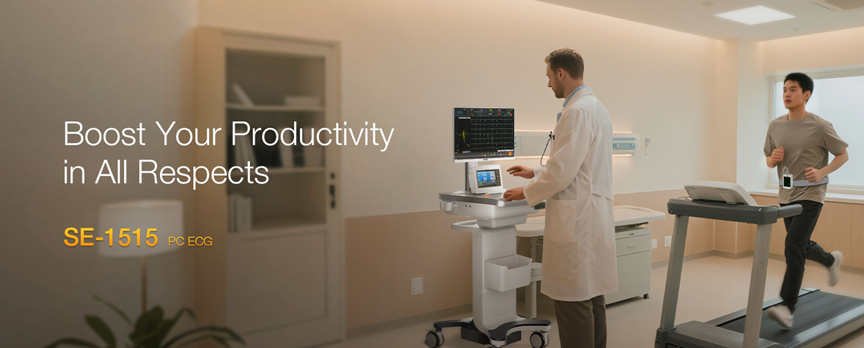
EDAN’s SE-1515 is particularly well-suited for certification programs due to its integrated design. This all-in-one ECG workstation combines precision sampling boxes with comprehensive software, supporting resting ECG tests, stress testing, ECG data management, and network gateway connectivity. Its unified interface simplifies training, allowing clinicians to focus on mastering essential functions without switching between multiple devices or software platforms.
The SE-1515’s structured workflow helps standardize learning and ensures that certified users can confidently perform high-quality ECG examinations.
Benefits Beyond Certification
Certified clinical users contribute to both operational efficiency and patient safety. Standardized proficiency reduces the likelihood of recording errors, streamlines data entry, and facilitates rapid interpretation of resting ECG results. Over time, certification programs also support staff retention and professional development, enhancing morale and overall departmental performance.
By integrating certification with hands-on experience on robust equipment, facilities can create a culture of competence and confidence in cardiac diagnostics.
Conclusion
Formal certification programs ensure that clinical staff can fully leverage the capabilities of resting ECG systems while maintaining high standards of patient care. The SE-1515, with its all-in-one design and comprehensive functionality, provides an ideal platform for training and certification initiatives. EDAN supports these efforts by offering ECG machines engineered for intuitive use, enabling clinicians to combine efficiency, accuracy, and confidence in every examination.
